
How rising expectations are reshaping digital standards for associations
Members increasingly judge their association experience against the digital services they use every day. Self-service, mobile-friendly access and relevant communications are no longer “nice to have”. They’re the baseline.
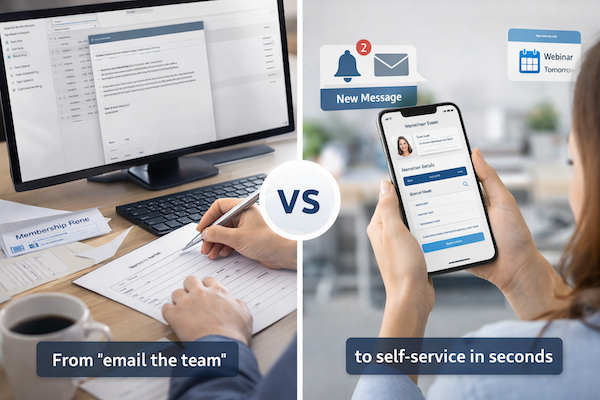
When someone can book a holiday, manage their banking and order groceries from their phone in minutes — but has to email your team to update their address — the contrast is stark. When Netflix recommends content based on behaviour, but your organisation sends the same newsletter to 3,000 very different members, the gap becomes obvious.
This isn’t about competing with Silicon Valley. It’s about recognising that digital experience now directly affects retention, reputation and perceived value.
What changed (and why “good enough” stopped being good)
A decade ago, simply being online felt progressive. Moving from printed directories to website listings, from postal newsletters to email, from telephone enquiries to online forms — that was real progress.
But member expectations didn’t stand still.
Today, people spend their lives inside services that are designed to be intuitive, fast and mobile-first. So they naturally expect the same from their membership organisation. That means:
- Navigation that requires no explanation
- Updates that happen immediately (not “within five working days”)
- Full functionality on mobile
- Communications that reflect member interests or role
- The ability to manage personal details without contacting support
The key shift is this: members don’t compare you to other associations. They compare you to the best digital experience they’ve had that day.
The warning signs are often quiet
Members rarely complain directly about usability. They disengage instead. Look for signals like:
- Fewer logins to the member area
- More “how do I…?” queries to your team
- Drop-offs partway through renewals, registrations or profile updates
- Younger members bypassing digital touchpoints entirely
And here’s the trap: many leadership teams review the website on desktop, while most members experience it on mobile. If you don’t feel the friction, it doesn’t get fixed.
Why it matters
In the short term, poor digital experience increases admin. When self-service fails, members contact support. Staff compensate. The cost-to-serve rises.
In the long term, the impact is strategic. If accessing value is difficult, the perceived value declines — even if your content, CPD, events and community are genuinely excellent. Members rarely leave because of one failure. They leave because cumulative friction makes staying feel harder than leaving.
What effective organisations do differently
They don’t chase shiny features. They focus on reducing friction and increasing relevance.
They ask simple questions: What does joining feel like? How easy is renewal? Can a member update details in under a minute on mobile? Can people find what they came for quickly?
Most importantly, they treat digital experience as ongoing work — not a one-off project — because member expectations will keep rising.
Modern members expect modern experiences. The question is: are you ready?
Senior Internet Ltd partners with membership organisations to deliver not just powerful digital platforms, but ongoing support that ensures long-term success. If you’d like to discuss how true partnership can help your association thrive, book a free consultation at https://senior.co.uk/contact/










Leave A Comment