
Picture this. An environmental consultant has just been handed a site investigation for a former waste dump. The preliminary risk assessment flagged potential contamination migration into a nearby watercourse, the client wants to move fast, and the local authority is asking questions she hasn’t dealt with before about controlled waters risk thresholds. She needs specific help. Not a Google powered generic guidance note, something trusted, from someone who’s dealt with this problem on a similar site.
And here’s the thing. She’s a paying member of a professional body that has, somewhere in its ecosystem, exactly the expertise she needs. Members who have managed contaminated land assessments on former industrial sites near sensitive water natural resources. Case studies from projects with similar geology and regulatory impacts. Practitioners who have presented to conferences on controlled waters risk. Specialists who have published articles on exactly this problem. The knowledge exists within the membership body. It’s just invisible to her.
Relevant?
This is the relevancy conversation. How the rich seam of membership body data can be used in context by members? In Nic Newman’s recent trends report for the Reuters Institute he described this as liquid content:
“Content that adapts in real time to the user’s context, location, or interaction – enabled by AI and built from flexible, reusable content blocks.”
This perfectly sums up the conversations preparing for this ‘liquid’ future so membership organisations can use their data in context. For example, they know what their members do. Specialism, sector, project types, years of experience, qualifications, CPD history, conference attendance, papers they have contributed. That’s not just a searchable database. That’s a map of where the expertise lives. And right now, few are using it to help a member in a difficult moment find the right person, the right case study, or the right piece of evidence-based guidance that is relevant to their real world situation.
The trust piece matters here. Members already trust their professional body in a way they don’t trust a Google result or a cold approach on LinkedIn. That trust is earned but underused. When someone’s facing a genuinely difficult technical problem, such as a contentious environmental impact assessment, a novel regulatory challenge, or a site that doesn’t fit neatly into standard frameworks, they don’t want pages of PDF content. They want confidence that they are being pointed toward something real, tested, and relevant.
The data to make this happen is often already being collected. It just needs to be turned into something useful now, when a member actually needs it. That’s not a tech problem. It’s a data governance framework decision.
Governance
Good data governance in your institute is not just one person’s job. Everyone should understand it is the foundation everything else runs on. At its core, it means your data is accurate, complete, and consistent, backed by processes that maintain it. It means you are meeting your legal and regulatory obligations, not scrambling to catch up when the rules change. It means your data is structured in a way that works with modern tools, including AI, so your teams can move faster and make better decisions. Finally, it means you’re handling all of it responsibly, ethically, securely, from the moment data enters your organisation to the moment it leaves.
Get these basics right, and data can become the liquid asset it is supposed to be.
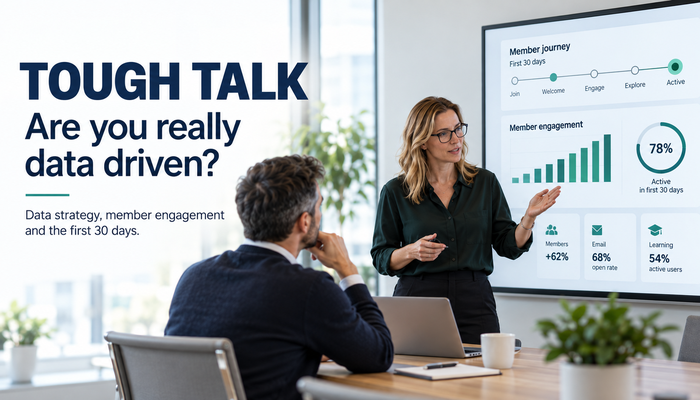
Librios will be at the Membership Solutions Day: Data-driven Decisions on 11th June 2026 in London.
Librios is a secure AI platform that turns complex data and documents into actionable insights. Contact us for a demo or visit www.librios.com #GenAI #DaaS







Leave A Comment