
Almost every stalled benefits launch dies the same death. Not at the pitch, not at the budget, but in a room three weeks later where someone from IT asks how it connects to the CRM, and nobody has a clean answer.
The project does not get rejected. It gets deferred. Which, in practice, is the same thing.
The irony is that the integration is usually the least complicated part of the whole programme. It only feels enormous because it is the part nobody has scoped.
How does a member rewards platform integrate with a CRM?
Through a much smaller doorway than most people expect. There are really only three things that need to pass between the two systems.
- Who the member is, so they can log in.
- Whether they are currently entitled to access, so only paid-up members get through.
- What they did once they were in, so their activity can flow back into their member record.
That is it. A benefits platform does not need your full member record, your finance history or fifteen years of correspondence. It needs identity, eligibility and a return path.
Single sign-on handles identity. Mature open standards already solve this. SAML 2.0 and OpenID Connect are the ones to ask about. If your system supports either standard, members sign in with their existing credentials. No second password to manage.
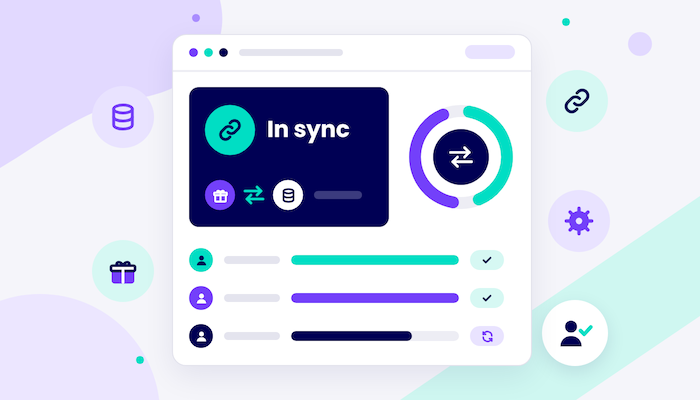
Eligibility is a data sync. That can be a live API call, or a scheduled file drop of who is currently active. Both work. One is just tidier than the other.
Should you wait for a CRM migration before launching a rewards platform?
A CRM mid-migration is a better reason to start than to wait. This is the objection that kills the most launches, and it deserves scrutiny.
A migration is a long project. If the benefits programme waits for it, the programme inherits every delay the migration suffers, and migrations are famously bad at finishing on schedule.
The way out is to decouple them. Because the integration surface is so small, it is far easier to re-point than a full system dependency.
A rewards platform that talks to your current system through three fields can be redirected at the new one later without rebuilding the programme around it.
So ask the question that actually matters. If this CRM disappeared tomorrow, how much of the benefits programme would you have to rebuild? Usually the honest answer is a data feed and an authentication method.
That is not lock-in. That is a connection you can move.
Can you launch a member rewards platform before the CRM integration is complete?
In most cases, yes, and plenty of organisations do.
Integration is not binary. There is a well-trodden path from a simple manual start to a fully automated one, and members cannot tell the difference from where they are standing.
A phased approach usually looks like this. Begin with a periodic eligibility file, exported from the CRM and uploaded on a schedule. Move to an automated file transfer once that is running. Add single sign-on so members stop managing a separate login. Then add the return feed, so engagement and savings data flows back into member records.
Every stage delivers real value to members. Only the last one delivers full value to you, and there is no rule that says you have to wait for it.
The integration is smaller than the objection
The technical question is worth asking. It just rarely blocks what people think it blocks.
Scope it early. Keep the surface small. Phase the build so members get something useful while the plumbing catches up.
A programme that launches imperfectly still improves. One that waits for a perfect integration never launches at all.

Propello offers a range of tools to help drive new member acquisition, increase brand loyalty, boost member retention and improve the experience for your members.
Contact us to learn more.









Leave A Comment