

I keep hearing membership organisations talk about using AI to predict what members need before they even ask. But here’s what I’ve learned: most can’t even tell you who their most valuable members are.
The Problem Hiding in Plain Sight
When I ask organisations about their AI strategy, they light up. When I ask about their data, the energy shifts.
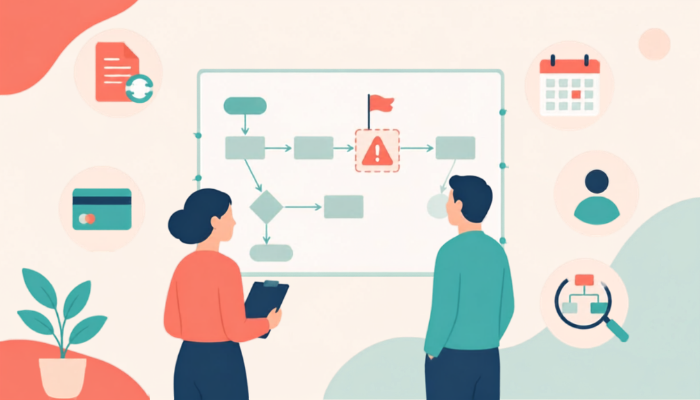
Here’s what’s actually happening: Member information lives in one system. Financial data sits in another. Marketing information exists somewhere else entirely. Getting a single view of a member becomes nearly impossible. Only 22% of business leaders say their teams share data well. Organisations skip straight to predictive analytics and chatbots while their fundamental data remains disconnected and messy.
What Clean Data Actually Reveals
When organisations finally connect their data silos, they start with basic reporting. And that basic reporting destroys assumptions. I’ve watched organisations discover they’ve been targeting the wrong member segments for years. Some change their entire sales and marketing strategy overnight once they see what the data actually shows. Organisations operate on urban myths about their members until data proves or disproves those myths. The hidden knowledge was always there—they just couldn’t access it through disconnected systems.
The AI Hallucination Problem Nobody Talks About
When you implement AI on top of messy data, you create an unknown risk. The AI doesn’t tell you it’s working with incomplete information. It just fills in the gaps. 89% of data and analytics leaders with AI in production have experienced inaccurate outputs. Poor data quality costs organisations an average of $12.9 million annually. The scariest part? You don’t know the insights are wrong. The AI sounds confident, but underneath, you’re making decisions based on hallucinations.
What Actually Works: Predicting Churn
When organisations get their data cleaned up, the first thing they should predict is churn. If you can identify behaviour patterns that signal someone is about to leave, you can intervene before they’re gone. The signals are often passive: A member stops logging in, their event attendance drops, or they check the terms and conditions to research their exit. That last one is fascinating—someone reading your cancellation policy is literally planning their departure. Organisations using predictive tools often see a 20-30% boost in retention, with first-year renewal rates for associations often under 60%.
Beyond Retention: The Scaling Promise
Once you’ve tackled churn prediction, AI opens other opportunities: better chatbots, automated Q&A tools, and internal process automation that lets you serve members faster. Here’s what it actually takes:
- Start with an audit to identify where manual effort creates bottlenecks.
- Create a strategy aligned with realistic budget that prioritizes where you’ll derive the most value.
- Expect cost neutrality within 6-12 months and potential 4-to-1 returns within 1-2 years.
But none of this works if your data foundation is broken.
Start With What’s Real
The AI conversation in membership organisations has become disconnected from reality. Everyone wants advanced capabilities without doing the basic work. You need clean data before algorithms. Connected systems before predictions. You need to know who your valuable members actually are before you try to personalize their experience.
Organisations seeing real results start with basics first: simple reporting, data accuracy, a single view of members. Then they move to predictive analytics. Because when you build AI on disconnected, incomplete data, you’re not predicting member needs. You’re predicting fiction.
Book a free call to explore how your membership organisation can leverage data and AI at https://data-cubed.com/







Leave A Comment