
On 13 October I’ll be at MemberWise’s Membership Solutions Day with a stand, a pile of postcards and one question: what’s getting between you and your members? The programme is full of CRMs, platforms, data and AI, and Fact&Fiction is a marketing consultancy that doesn’t sell software, so it’s fair to ask what we’re doing there.
The answer is that a lot of our membership work involves technology. When an organisation brings in new systems or joins up the ones it has, from the CRM and website to the learning platform, events, finance or a member app, it shapes what members experience for years. We work alongside whichever technology partners a client has chosen, as senior strategic support, extra delivery capacity or both. Sometimes that’s before a system is picked, and often it’s long after it has gone live.
Five colleagues, five value propositions
Membership technology can join up your data, automate renewals, personalise what members see and, increasingly, use AI to help explain what’s driving their behaviour. What it can’t do is define your member value proposition, or decide which services and benefits matter most to which members.
In my experience, most organisations do know their value proposition, but everyone holds a slightly different version of it. Membership, marketing, events and the board each describe it in their own way, and a platform built on several versions can end up reflecting all of them at once. Agreeing one version is easiest before a build. It’s also one of the first things we look at when a system is live but not delivering what people hoped, and often the fix has less to do with configuration than with making full use of what’s already there.
Good briefs aren’t just for humans
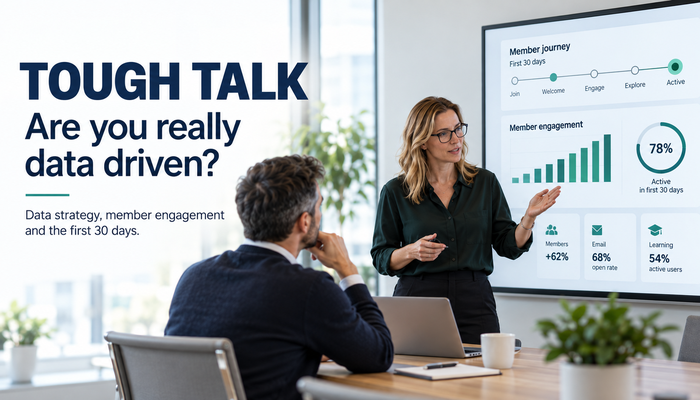
Joined-up data shows you where people drop out of the join journey, which grades lapse at renewal and who hasn’t opened the app in months. Whether a person or an AI tool does the analysis, it’s only as good as the brief behind it. That means baselines to compare against and a shared definition of success, which usually needs to vary. A student member and a long-standing fellow get value in different ways. Someone who comes to every event and someone who only reads the journal might both be perfectly happy members.
We saw this with a trade association we work with. Their existing member portal was used mainly as a self-service admin login, so on paper engagement looked low. In reality members were engaging with the organisation, just not anywhere the data could see. Working with their marketing and membership teams and their subject specialists, we rebuilt the portal around what members value, which gave them their first structured view of engagement.
People matter most at either end: deciding which questions are worth asking, and deciding what to do with the answer. That’s even more true as AI makes information easy to find. When members can get an answer from anywhere, knowing who to trust becomes more important, and trust is a membership organisation’s superpower.
Big ambitions, small team
Having worked in-house for almost a decade, I know these projects land on top of a day job that doesn’t stop. That was the case when we worked alongside World Commerce & Contracting (WorldCC) on their digital strategy ahead of a move to ReadyMembership. Their team was great and knew where they wanted to get to, but they were small and busy, and we all know what that’s like. We helped fill some knowledge gaps and gave them extra delivery resource they could trust.
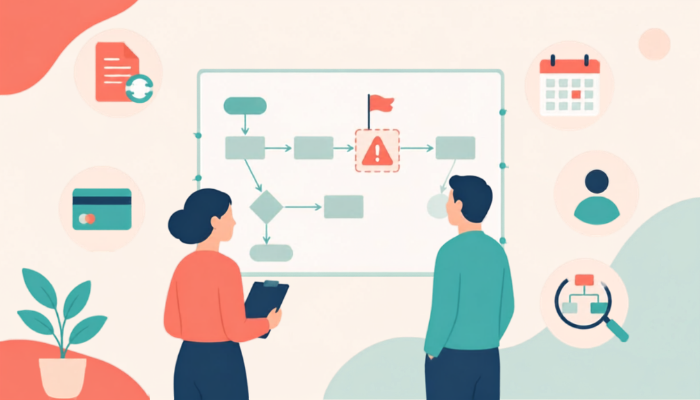
Much of the work was designing journeys that hold together from a prospective member’s first visit to the value they get in the portal. With a high volume of content to sort, we set the parameters from the journeys and personas we’d developed with the team: what each audience needed, what could go and how everything should be tagged. AI tools from the platform provider then did the sorting at a scale nobody could have managed by hand, which saved a huge amount of time. That worked because the tools had a clear, member-led brief.
Questions for your next team meeting
Whether your project is about to start or went live years ago, these are worth working through:
- If you asked five colleagues to describe why members belong, would you get the same answer?
- Does success look the same for every grade and engagement level, or should it vary?
- What baselines do you have, so you can tell whether things are improving?
- Who reviews what your data and AI tools recommend, and who has time to act on it?
See you on the 13th?
If you’re going, the 9.30 opening panel, “Connected Membership: The Integration Reality for Associations”, includes Julian Davis, COO at WorldCC. It’s a good chance to hear first-hand how their project came together. Afterwards, come and find our stand and tell us what’s getting between you and your members.
You can find out more about how we work with membership organisations at factandfiction.london/membership.






Leave A Comment