

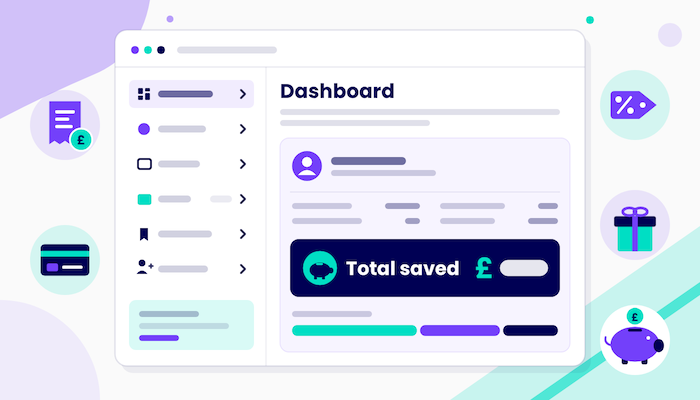
Ask a member how much your benefits saved them last year and most will shrug. Not because the savings were not real. Because nobody ever added them up.
The value was there. It just arrived in pieces too small to notice: a few pounds off the weekly shop, a discount on a big purchase, a members-only price they barely clocked at the time.
Spread across twelve months, each saving is forgettable. Totalled up, it can cover the cost of membership and then some.
That total is the most persuasive number your organisation has. Most never show it to anyone.
Why don’t members notice their membership savings?
Because savings are quiet. They happen at the checkout, in the moment, then vanish from memory long before renewal comes round.
This is the perception gap that decides renewals. A benefits programme can be genuinely excellent and still lose members, because the problem was never the value. It was that nobody ever proved it.
You cannot fix that with more perks. You fix it with a figure.
How do you calculate member savings from benefits?
You measure each saving against what the member would otherwise have paid.
Every time a member uses a benefit, there is a gap between the price they paid and the standard price. A discounted gift card, a members-only rate, cashback on a purchase: each one has a number attached.
On its own it is trivial. The work is in capturing every one of them, tagging it to the individual member, and adding them up across the year.
That is a data job, not a guessing job.
If your platform records what each member redeemed and what they saved on it, the annual total builds itself. If it does not, you are estimating, and members can tell the difference between a real figure and a rounded-up one.
How do you show members their savings?
You put it in front of them, personally, and before the renewal invoice lands.
The format that works is a personalised savings summary:
“This year, your membership saved you £186 across 23 offers.“
Not a claim about the programme. A statement about them. Sent 60 to 90 days ahead of renewal, it reframes the whole conversation before the bill ever arrives.
The specificity is the point. “You saved £186 this year” does a job that “your membership is great value” never can, because one is an assertion and the other is arithmetic.
Membership organisations that personalise the renewal ask around each member’s actual usage consistently outperform those that send everyone the same generic reminder.
Why are personalised savings more persuasive than generic value claims?
Because a number is hard to argue with.
“Good value” is a marketing line, and members have learned to tune those out. A personalised total is evidence, drawn from their own behaviour. It does not ask them to take your word for anything.
It helps to pair the figure with a face.
Picture a member who checks for an offer every time they are about to spend somewhere they were going anyway, buying discounted supermarket gift cards for the shop they do every week. Individually, pennies. Across the year, over two hundred pounds, without changing a single habit.
That is a story a member recognises, wrapped around a number they cannot dismiss.
The number does the arguing
Stop telling members they get value. Show them the total, in their own name, in pounds.
A saving a member never sees may as well not exist. A saving you put in front of them, itemised and specific, stops being a vague hope that membership is “worth it” and becomes a figure they would have to give up.
That is not a renewal pitch. It is a member reading their own numbers and reaching the only conclusion those numbers allow.

Propello offers a range of tools to help drive new member acquisition, increase brand loyalty, boost member retention and improve the experience for your members.
Contact us to learn more.









Leave A Comment