
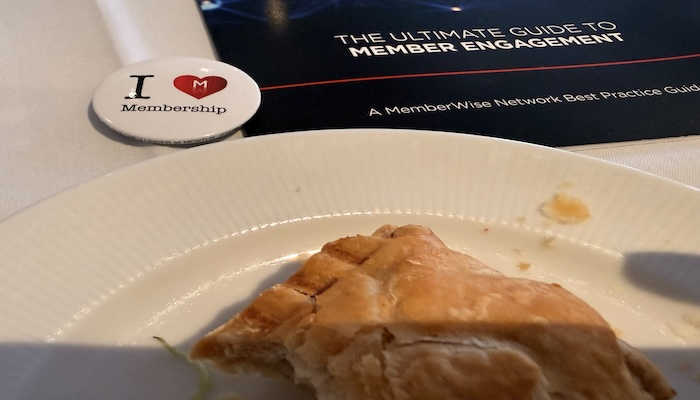
Half a sausage roll went cold on my plate at MemberWise’s Membership Solutions Day because I kept getting pulled into conversations. I get over-excited easily, and technology is one of the quickest ways to do it, so a day of clever tech talk was right up my street. I went to a panel, joined a workshop and did a round of speed networking with people from opera house membership to tax, film directors, housing associations and fostering networks. A lot of the conversations started with what technology can do and ended up being about members, which is a good reminder of what gets lost when we all get carried away. Here’s what stuck with me about keeping them front and centre.
Technology is brilliant at showing you what’s missing
The panel, which included Julian Davis from WorldCC, talked about what gets in the way of integration, and it was mostly people and process. Technology has a habit of pointing at whatever isn’t working already. If the pieces of the puzzle aren’t in place, a new system will show you the gaps straight away, which can be helpful if you’re ready for it. Understanding the purpose of the organisation, and the purpose for the member, came up too, along with understanding why an organisation works the way it does before you try to change it.
What stays the same: your purpose, and your members
AI is changing how most professions and organisations work, and fast, so the road map will keep shifting. Your purpose to your sector won’t, whether that’s advocacy, professional support or something else. How you deliver value can change. What the value is, and who it’s for, has to stay front and centre, and for a membership body that’s the member.
It’s also where we start at Fact&Fiction, the marketing consultancy I run. We created the personalisation strategy for a trade association’s member portal, working with their marketing and membership teams and subject specialists to work out what members valued, then built the strategy around that.
What changes: the route, and the budget for it
D2L ran a workshop built around scenarios in membership organisations, and I chaired one of the tables. Budget and resource were high on everyone’s list of roadblocks, which won’t surprise anyone in membership. Projects take time and you can’t do everything at once, so you have to prioritise.
One example from my table was an organisation that wasn’t very joined up. Its vision and purpose weren’t clearly articulated, which made it hard to brief the team and hard to prioritise. That’s exactly when the excitement of the technology can take over. The theme was clear: start with a clear vision, a clear purpose and an agreed member value proposition, or the technology won’t deliver.
What stays the same: a human on the end of the phone
Member satisfaction surveys tell a good story here. For years, a common frustration was having to phone the organisation to find something out because the website was hard to navigate. Now, being able to phone a real person when you need support is really appreciated, and often named as a key benefit. AI can’t replace that, but it can help the person on the other end of the phone.
Alex Skinner from Pixl8 gave a talk on AI as a colleague. The idea is that AI is moving beyond something you ask questions of. It responds to your work as you go, and flags and pushes relevant insights and context to your role. That’s where Pixl8’s ReadyIntelligence is heading, with the aim of helping remove silos of information and data.
That’s an interesting shift when you think about how much information about a member can sit across different teams and systems. Rather than relying on someone knowing where to look, AI could bring that information together. So when a member calls, the conversation can be about what they actually need, rather than where to find the information to help them.
A bit of therapy helps
Change is uncomfortable, and what looks like resistance is often unease about uncertainty. Data can challenge preconceptions, and a good story helps bring colleagues with you. Julian talked about the value of bringing in outside expertise, for the skills, the objectivity and an extra pair of hands when there’s a lot going on. Those are the moments when it’s easiest to lose sight of the member. In our experience there’s a bit of therapy in it too, the tea and sympathy kind. It’s hard work, and having someone pragmatic and understanding alongside you makes it a bit easier.
Thank you to Richard and the MemberWise team for putting the day together, and to everyone who shared so openly. If you’re working out how to keep your members’ needs at the centre of what you do, we’re always happy to have a chat.
Small confession: we work with both WorldCC and Pixl8, where Julian and Alex work, so I’m biased. We’re always recruiting new members though, and the benefits include tea and a good chat.
You can find out more about how we work with membership organisations at factandfiction.london/membership.








Leave A Comment